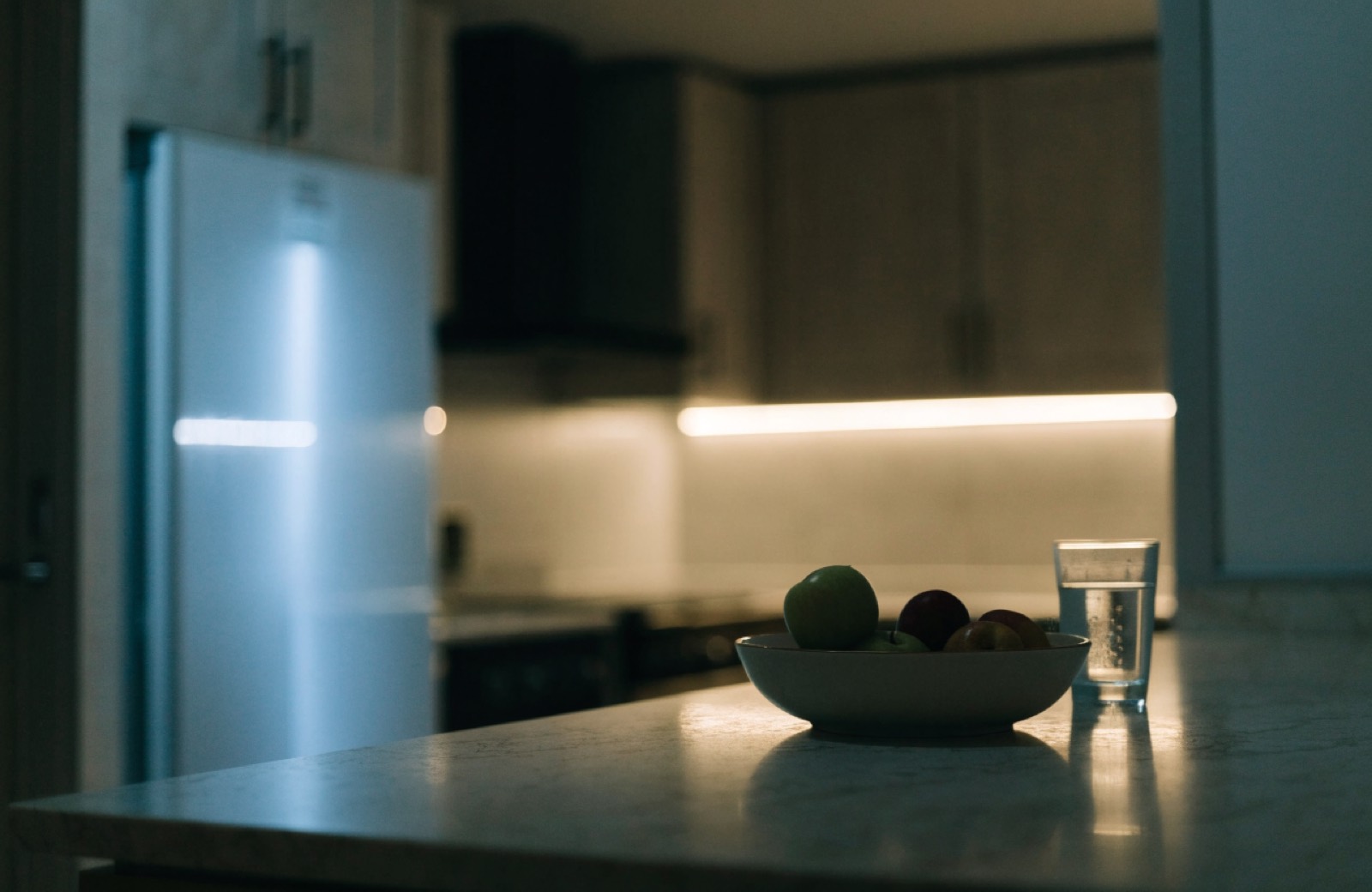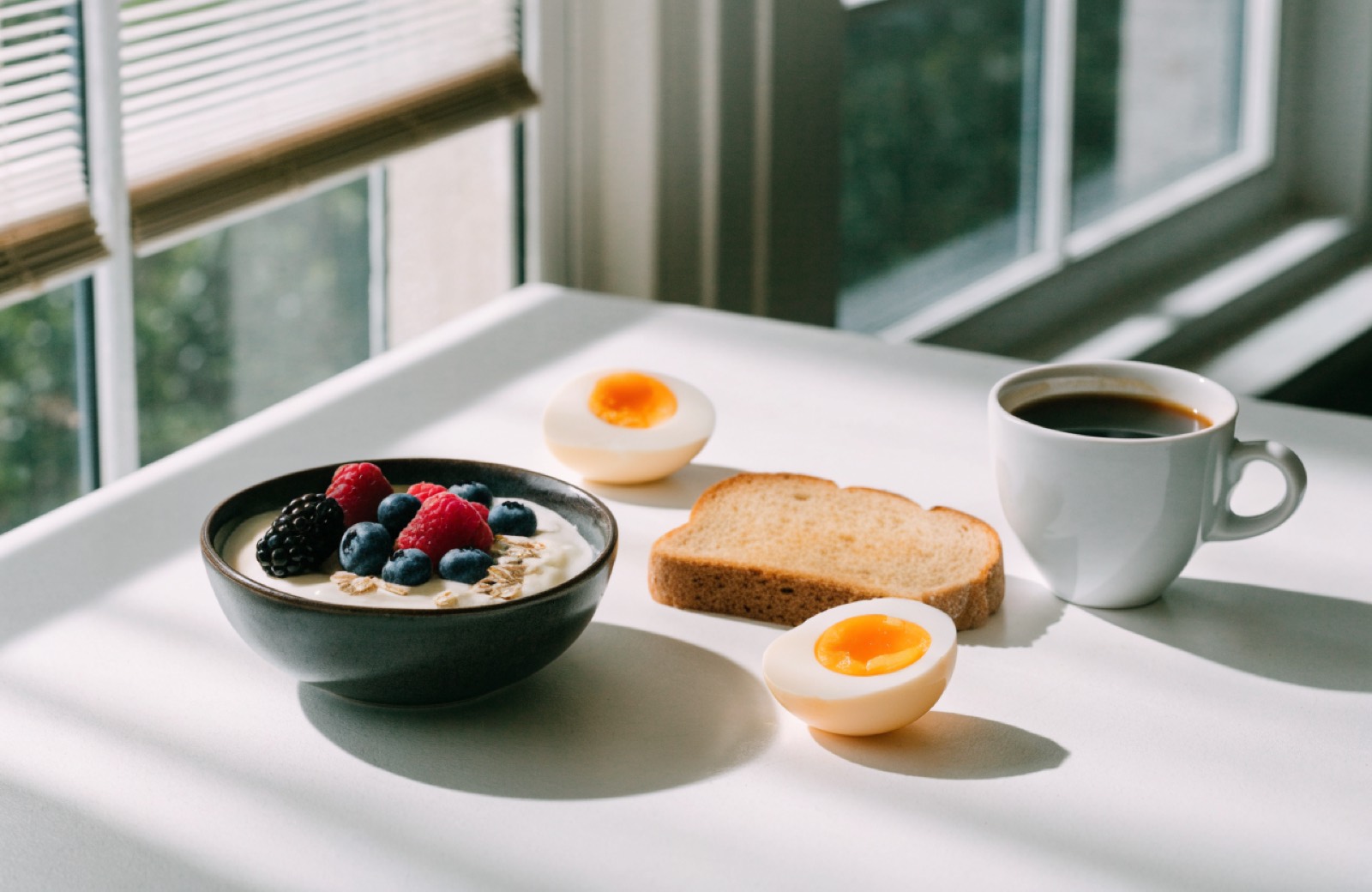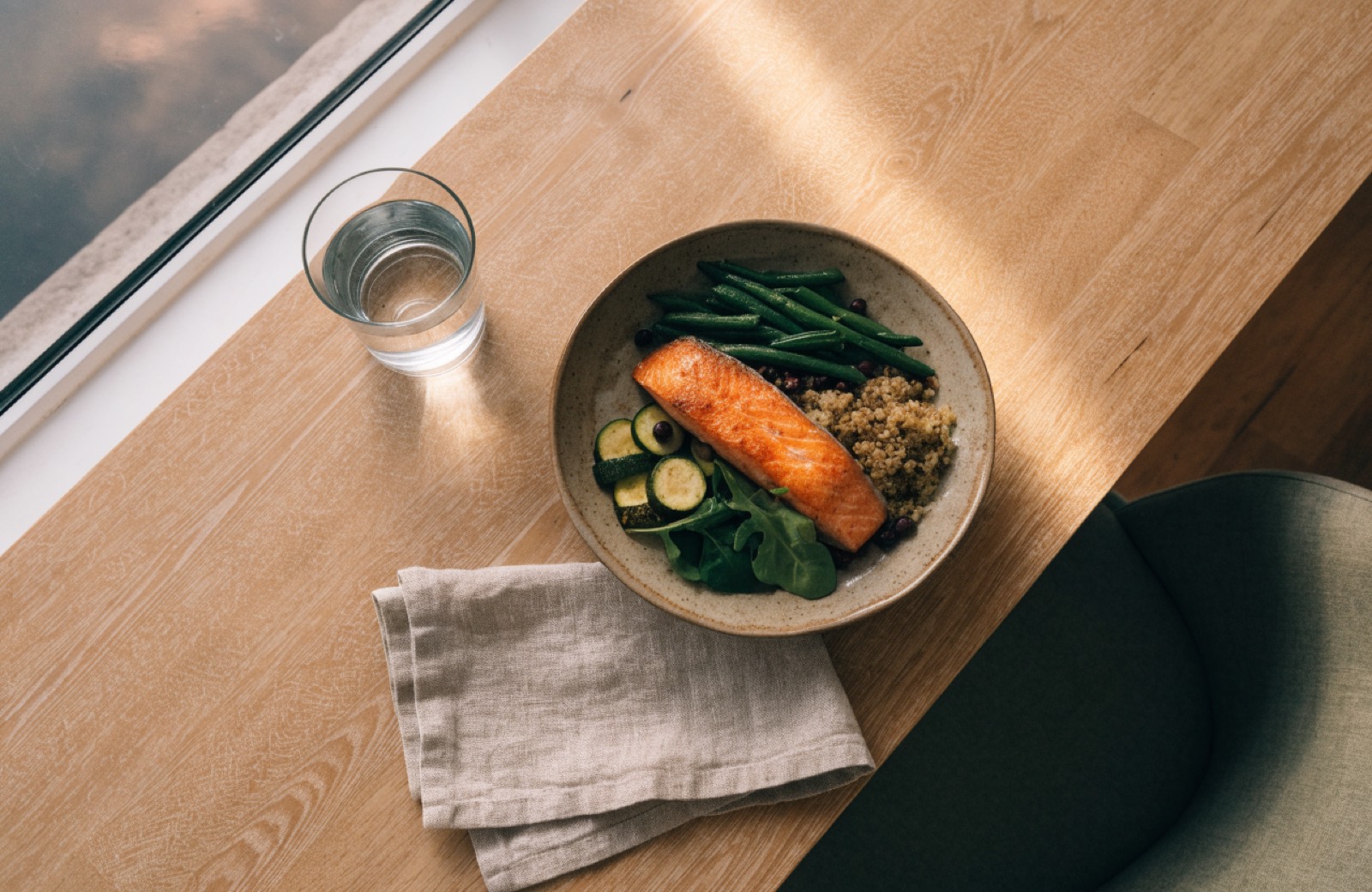
Try this: think back to the last evening you snacked more than you wanted to. Now rewind to 5 p.m. that day. Did you know what you were having for dinner?
For most people the answer is no. And that’s the point. The snack at 9 p.m. was set up hours earlier, when dinner was still a question mark.
This is the routine we recommend, and the one Meal Plan Club is built around. It doesn’t ask you to resist anything at night. It just makes sure there’s less to resist.
Why 5 p.m. matters
Late afternoon is the last moment of the day when deciding about food is still easy. You’re not starving yet, you’re not on the sofa yet, and there’s still time to shop or defrost.
Two hours later everything is harder. Your body clock is turning hunger up (in the lab it peaks around 8 p.m.), you’re tired, and every option that takes effort starts to look unreasonable. Whatever’s quickest wins, and the quickest options are rarely the most filling.
So the goal is simple: by 5 p.m., dinner should already be decided.
Step 1: Decide the week on Sunday (10 minutes)
The easiest way to have dinner decided at 5 p.m. is to have decided it days ago. Once a week, sit down and pick your dinners:
- Choose four or five dinners, not seven. Leave room for leftovers, eating out and the night nobody feels like cooking.
- Put the quick meals on the hard days. Late meeting on Wednesday? That’s the 20-minute stir-fry, not the slow braise.
- Repeat what works. Two or three dinners you love and can make half-asleep are worth more than variety.
- Cook once, eat twice. A batch of something on Sunday covers Monday and Tuesday.
Step 2: Shop once
A plan only helps if the ingredients are home. Turn the week’s dinners into one list and do one shop. The night you’d have snacked is often the night you got home and found nothing to cook.
Step 3: Make dinner satisfying
A dinner that’s too small, or all carbs and no protein, is an invitation to graze later. Aim for a plate that keeps you full for the rest of the evening:
- a proper portion of protein (fish, chicken, tofu, beans, eggs, lentils),
- vegetables or salad for volume and fibre,
- some slow carbs (potatoes, rice, grains, bread),
- and enough of it. Undereating at dinner is one of the most common reasons people end up back in the kitchen.
Step 4: Plan the snack, if you want one
Nothing in this routine says you can’t eat after dinner. If you love a bowl of yogurt or a piece of chocolate at 9 p.m., plan it into the day. A snack you chose on purpose, and leave room for, is just part of your eating. The snack you didn’t choose is the one that turns into a whole evening of grazing.
Step 5: Know your trigger, then write an if-then
Research on “implementation intentions” (if-then plans like “if I want a snack after dinner, then I’ll make tea”) is mixed for snacking specifically. Plans built around why you snack tend to work better than plans built around when and where. So before you write one, notice your real trigger for a week:
- Tired? Then the plan is an earlier bedtime, not a better snack.
- Bored? Then you need something to do with your hands at 9 p.m.
- Actually hungry? Then dinner, or the day before it, was too small. Fix that first.
- Stressed? Then you need a different way to wind down.
The if-then plan only works once you’re answering the right question.
Step 6: Close the kitchen
Give the evening a clear end: dishes done, lights off, kettle on. A small ritual makes “the kitchen is closed” feel like a fact rather than a fight.
The short version
- Decide the week’s dinners on Sunday.
- Shop once.
- Make dinner big enough to actually satisfy.
- Plan the snack if you want one.
- Know your trigger before you make rules.
- Close the kitchen.
None of this requires more willpower. It just puts the decision at 5 p.m., when making it is easy, instead of at 10 p.m., when it’s almost impossible.
Let the app do the planning
Meal Plan Club turns this routine into ten minutes a week. Plan your dinners (or let the AI week planner draft them), get one grocery list sorted by aisle, and see calories and macros for every meal, so dinner at 5 p.m. is already a done deal.
This article is general information, not medical advice.